- Anatomy
- Conditions
- Procedures
Cervical Fracture
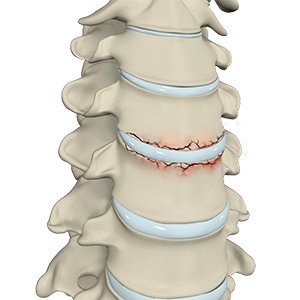
Cervical fractures are common in motor vehicle accidents, sports activities and falls. The second, sixth and seventh cervical vertebrae are frequently involved in fractures, which may injure the spinal cord. Cervical fractures are common in motor vehicle accidents, sports activities and falls. The second, sixth and seventh cervical vertebrae are frequently involved in fractures, which may injure the spinal cord.
Cervical Degenerative Disorder
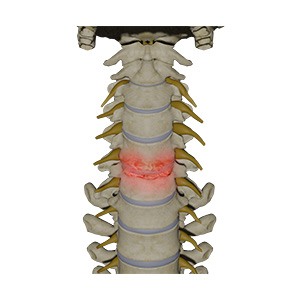
Cervical degenerative disc disease (DDD) is a misnomer as it is not a disease but a condition that affects the strength, resiliency and structural integrity of the intervertebral discs due to increasing age, trauma, injury, repetitive movement, improper posture, or poor body mechanics. Cervical DDD is commonly seen in adults after 50 years of age and most of them are usually not aware of their condition until they are examined for some other health condition.
Cervical Disc Herniation
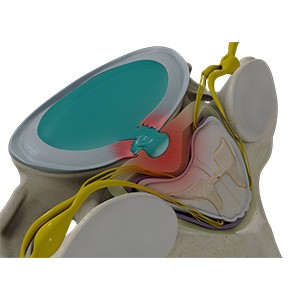
Cervical disc herniation can arise due to aberrations of the intervertebral disc such as bulging, rupture, and slipped or extruded disc. It results in neck, shoulder, and arm pain. In some cases, a disc herniation may occur due to injury, repetitive movements, or degenerative disc disease (DDD). In DDD the disc strength, resiliency, and structural integrity are affected due to advancing age, trauma, injury, smoking, poor diet, improper posture, or poor body mechanics.